 Skip to content

In today’s fast-moving business world, managing multiple tools for projects, CRM, analytics, and automation can feel like juggling too many tabs at once. That’s where Uhoebeans Software steps in a unified platform designed to bring all your core business operations under one smart system.
Having explored it deeply across different use cases, I’ve seen how Uhoebeans simplifies complex workflows, reduces manual tasks, and helps teams stay aligned in real time. Whether you’re running a startup or managing a growing enterprise, the platform’s versatility makes it a reliable choice for improving efficiency, collaboration, and decision-making.
In this article, we’ll walk through 20 practical ways to use Uhoebeans Software for business growth, from optimizing daily operations to building advanced automation that saves time and scales results.
Getting Started the Smart Way
After working hands-on with Uhoebeans Software for quite some time, I’ve learned that getting the setup right in the beginning makes all the difference. It’s not just about logging in and exploring features, it’s about building a strong foundation that keeps your workflows efficient and scalable.
Here’s the onboarding process I recommend based on real-world use:
- Define Roles and Permissions One of the first things I always do is organize user roles. Decide early who will be admins, standard users, or guests, and assign clear access levels. This structure keeps sensitive data secure and helps maintain clean audit trails as your team grows.
- Handle Data Migration with Care: When I first imported my existing contacts, tasks, and invoices into Uhoebeans, I realized how crucial it is to map fields accurately. A precise import ensures your automation runs smoothly and no valuable information gets lost in transition.
- Set Up Integrations and APIs: Uhoebeans connects beautifully with tools like email platforms, accounting software, and analytics dashboards. I always recommend linking these early on using APIs or built-in connectors. This way, you get a single ecosystem where all your data flows seamlessly.
- Define Clear Goals and KPIs: Before rolling out the software across teams, define what success looks like. I usually track metrics like response time improvement, task completion rates, and productivity gains. Setting these KPIs early helps you measure actual impact instead of guessing progress.
- Start Small Then Scale: My go-to approach is to launch a pilot run with one team first. It gives you quick insights into what works (and what doesn’t) before scaling it organization-wide. Once workflows are optimized, you can roll them out confidently across departments.
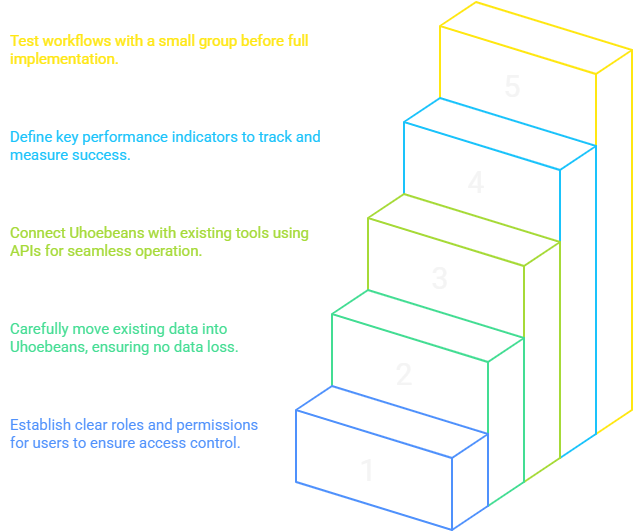
By following these steps, you’ll lay a solid foundation for everything else in the platform.
20 Expert Ways to Use Uhoebeans Software for Business Growth
Uhoebeans Software isn’t just a CRM or automation tool; it’s a complete business ecosystem designed to streamline workflows, analytics, and decision-making. Below are 20 proven, high-impact ways professionals use it to optimize efficiency, collaboration, and growth.
1. Design End-to-End Customer Journeys
Map every stage of the customer lifecycle from discovery to renewal using workflow automation and custom pipelines. Each touchpoint can trigger an automated action, improving conversions and ensuring a consistent customer experience.
2. Build Industry-Specific Dashboards
Use Uhoebeans’ flexible dashboard builder to track the metrics that matter most.
- E-commerce: Monitor cart abandonment, order value, and inventory turnover.
- Healthcare: Track appointment adherence, billing metrics, or patient engagement.
Tailored dashboards turn complex data into actionable business intelligence.
3. Automate Compliance and Audit Trails
Automated audit logs record every user action, maintaining transparency for compliance reviews. Templates for GDPR, HIPAA, and other standards simplify regulatory workflows and version control.
4. Run Micro-Campaigns for Local Markets
Segment contacts by geography or postal code to deliver hyper-local email or SMS campaigns. Geo-targeting improves response rates while keeping the main CRM database organized.
5. Create Interactive Client Portals
Build branded client portals that allow users to check project progress, invoices, and shared documents securely. Controlled access enhances professionalism and client trust.
6. Manage Subscriptions and Memberships
Automate recurring billing, renewals, and membership tracking through integrations with Stripe, PayPal, or other gateways. These automations support predictable revenue and reduce churn.
7. Coordinate Multi-Vendor Projects
For multi-partner projects, create shared workspaces where vendors can collaborate, update deliverables, and communicate within defined permissions. This ensures visibility without compromising data security.
8. Build AI-Driven Forecasts
Use historical data within Uhoebeans to generate predictive models for demand, sales, or resource planning. AI insights help optimize inventory, staffing, and financial projections.
9. Automate Employee Onboarding
Trigger workflows that handle new-employee setup from sending welcome emails to assigning training modules and permissions. This streamlines HR processes and ensures consistent onboarding.
10. Centralize Department Budgets
Manage cross-department budgets in real time. Collaborative budgeting tools prevent overspending and improve transparency between finance, marketing, and operations teams.
11. Create a Unified Knowledge Hub
Build a centralized knowledge management system with SOPs, training materials, and policy documents. Version control ensures teams always reference the most updated resources.
12. Track ESG and Sustainability Metrics
Log environmental and social data such as energy consumption, waste reduction, and diversity ratios. Dashboards visualize ESG progress for internal and stakeholder reporting.
13. Automate Customer Support Routing
Set up intelligent ticket routing based on keywords or sentiment. High-priority or urgent cases are automatically directed to senior support agents, reducing response time and boosting customer satisfaction.
14. Integrate IoT and Smart-Device Data
In sectors like manufacturing or logistics, connect IoT sensors to monitor real-time conditions such as temperature, humidity, or equipment status. Alerts help teams respond before issues escalate.
15. Host Virtual Events or Webinars
Manage the full event lifecycle registration, reminders, live streaming, and feedback directly inside Uhoebeans or via integration. Centralized event data enhances engagement insights.
16. Gamify Internal Productivity
Introduce gamification to boost engagement. Features like leaderboards, badges, and achievement tracking foster healthy competition and drive team motivation.
17. Automate Seasonal Price Adjustments
Create dynamic pricing rules tied to inventory, demand, or seasonal patterns. Automated pricing keeps margins steady and reduces manual intervention during high-traffic periods.
18. Enable Secure E-Signatures
Integrate legally compliant e-signature tools (ESIGN, eIDAS) to streamline document approvals. Proposals, NDAs, and contracts can be signed digitally without leaving the platform.
19. Capture Data Offline
For teams working remotely or in the field, Uhoebeans’ offline mode enables data entry without an internet connection. Once reconnected, data syncs automatically to maintain accuracy.
20. Build Custom Extensions and Apps
Use the Uhoebeans SDK to develop add-ons or internal tools tailored to specific workflows. This allows scalability without altering the core platform architecture.
Best Practices for Maximising ROI
To truly get a return on your investment in Uhoebeans, follow these guidelines:
- Set measurable success metrics (e.g., reduce manual hours by 20%, increase task completion rate).
- Train and adopt gradually: use champions, weekly feedback sessions, and documentation.
- Review usage and analytics: monitor which features are used and where bottlenecks remain.
- Iterate workflows: don’t over-customize at first; optimize in phases.
- Maintain governance: periodically audit permissions and integrations to avoid sprawl.
Common Pitfalls to Avoid
- Over-customization too early: you may create technical debt that’s hard to maintain.
- Poor change management: staff may resist or ignore the tool if not onboarded well.
- Weak data security: integrating too many third-party apps can open vulnerabilities; watch access control strictly.
- Ignoring mobile or offline use: if you don’t support field teams, parts of your business suffer.
- Neglecting analytics & KPIs: without tracking results, you won’t know what is working or not.
Conclusion: The Smarter Way to Use Uhoebeans Software
Uhoebeans Software represents a unified business platform built for modern organizations that value automation, collaboration, and insight-driven growth. Throughout this guide, we explored 20 strategic ways to apply its capabilities from customer journey mapping and workflow automation to data forecasting, compliance tracking, and productivity gamification.
When configured correctly, Uhoebeans becomes more than just a management tool; it transforms into an intelligent ecosystem that connects teams, data, and processes under one roof. Businesses using it effectively experience improved coordination, faster decision-making, and measurable operational efficiency.
In essence, Uhoebeans empowers companies to scale smarter, reduce friction, and convert data into long-term business value. Whether you start with a single automation or a complete digital transformation, each step builds toward a more agile, integrated, and future-ready enterprise.
