 Skip to content
A backlink pyramid is an advanced SEO strategy where links are structured in tiers to maximize authority flow to a target page, often called the money page. Despite publishing high-quality content, many websites struggle to rank because random or low-quality backlinks fail to deliver value, or worse, trigger Google penalties.
A properly built backlink pyramid solves this by organizing Tier 1, Tier 2, and Tier 3 links in a strategic hierarchy, ensuring that link equity flows naturally and safely. This approach not only improves indexing but also strengthens your overall link profile, giving your pages sustainable ranking power.
In this 2025 advanced guide, you’ll learn how to create a backlink pyramid step by step, including safe link-building strategies, anchor text distribution, and tiered approaches that deliver measurable SEO results.
Structure of an Effective Backlink Pyramid
A strong backlink pyramid consists of three distinct tiers, each serving a unique purpose and requiring a different approach to content and link sourcing.
Tier 1: High-Authority, Contextual Backlinks
Tier 1 is the most critical level of your pyramid. These links are responsible for directly passing significant authority to the money page. To maximize effectiveness, Tier 1 links should come from authoritative and contextually relevant sources.
Sources for Tier 1 Links:
- High-quality guest posts on niche sites (find unique sites for guest post)
- Contextual niche edits
- Editorial backlinks
- Digital PR (HARO, Terkel, Help a B2B Writer)
- Authoritative business citations
- Real outreach backlinks
- High-quality press releases
- Contextual link insertions
For example, a SaaS company can boost its rankings by securing a guest post on a site that covers its industry, such as a marketing, business, or software-focused publication. Even a single feature in a well-respected industry blog can pass strong authority and signal topical relevance to search engines. The key is to focus on quality, not quantity. A few highly relevant Tier 1 links are far more powerful than dozens of generic links. Think of Tier 1 links as the backbone of your backlink pyramid, they carry the most weight and set the foundation for everything else.
Tier 2: Medium-Authority Links for Reinforcement
Tier 2 links support Tier 1 backlinks by boosting their authority and helping them get indexed faster. They act as reinforcement, ensuring link equity flows efficiently while maintaining relevance and strengthening the overall structure of your backlink pyramid.
Sources for Tier 2 Links:
- LinkedIn and Medium supporting articles
- Web 2.0 properties
- Social bookmarks
- Press release distributions
- Social media shares (Facebook, X, LinkedIn, Pinterest)
- Mid-level directory links
- Niche-relevant blog comments
- Profile links from mid-authority sites
Tier 2 content often includes supporting articles that link back to Tier 1 content.
For example, a Medium post about “advanced marketing techniques for SaaS companies” linking to a Tier 1 guest post about “SaaS growth strategies” helps strengthen the contextual relevance of the Tier 1 link.
Tools like RankerX or SEO Autopilot can assist in scaling Tier 2 links, but content quality and relevance should always come first.
Tier 3: High-Volume Link Boosters
Tier 3 focuses on accelerating indexing and diversifying your backlink profile.While Tier 3 links don’t pass substantial direct ranking power, they play a vital role in ensuring that Tier 2 links are recognized and indexed by search engines.
Sources for Tier 3 Links:
- Blog comments
- Forum profiles
- Mass Web 2.0 properties
- Tier 3 social shares
- RSS aggregators
- Generic directories
- Low-DA article directories
- Indexer or pinging sites
In 2025, safety is paramount. Google has become adept at detecting automated spam signals, so Tier 3 links must appear natural. Genuine engagement in relevant forums or sharing content across multiple social platforms ensures Tier 3 links contribute effectively without introducing risk.
Steps to Build a Backlink Pyramid Safely
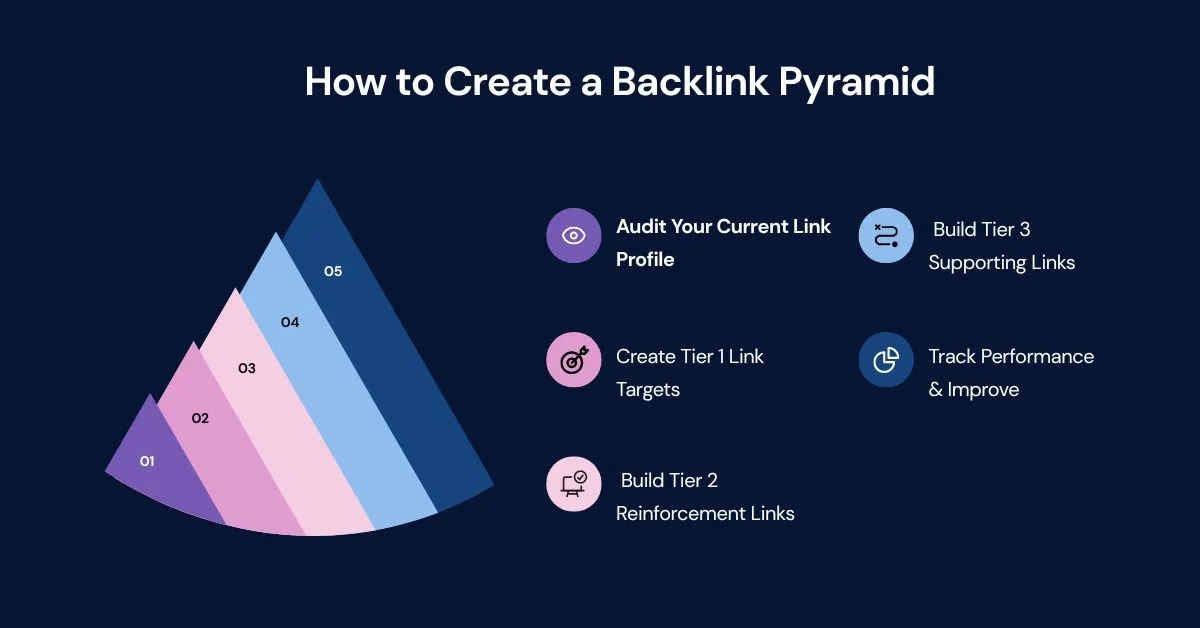
Step 1 — Audit Your Current Link Profile
Before building a pyramid, perform a thorough audit of your existing backlinks using tools like Ahrefs, SEMrush, or Google Search Console. Identify link gaps, detect weak anchor text distribution, and remove toxic backlinks. Conduct competitor gap analysis to find opportunities for Tier 1 outreach.
For instance, observing that a competitor has high-authority guest posts in your niche can guide your own link acquisition strategy.
Step 2 — Create Tier 1 Link Targets
Select Tier 1 targets based on authority metrics such as Domain Authority (DA), Domain Rating (DR), topical relevance, and organic traffic. Ensure that the sites you approach have strong editorial standards. Personalized outreach and quality content are essential at this stage, and using strategies to guest post outreach without spamming can save time while maintaining safety. A well-chosen Tier 1 link can significantly impact your money page’s search rankings.
Step 3 — Build Tier 2 Reinforcement Links
Tier 2 links support Tier 1 by strengthening their authority and ensuring they get indexed. Create supporting articles on all Tier 2 sources, such as LinkedIn and Medium articles, Web 2.0 properties, social bookmarks, press release distributions, social media shares, mid-level directories, niche blog comments, profile links, and link them to Tier 1 content using secondary keywords. Employ topical clustering to maintain thematic relevance and stagger link building to mimic natural growth.
Step 4 — Build Tier 3 Supporting Links
Tier 3 links should be built slowly, keeping the pace under 150 links per week to stay safe from Google’s spam filters. Use tools like Omega Indexer or Instant Link Indexer to get your links indexed quickly. Include a variety of content types, forum posts, blog comments, RSS submissions, social shares, and low-DA directories. The goal is not to boost rankings directly but to support Tier 2 links and strengthen your overall link profile naturally.
Step 5 — Track Performance & Improve
Monitoring your backlink pyramid is essential for long-term success. Track your rankings using tools like Ahrefs, Nightwatch, or SERPWatcher to see how your pages perform. Check which links are indexed through Google Search Console and reliable paid indexers. Evaluate performance regularly, after 30, 60, and 90 days, to spot trends and issues. If any Tier 1 links are lost, replace them quickly and reinforce them with Tier 2 links to maintain the flow of link equity. Consistent monitoring ensures your pyramid remains strong, effective, and safe from algorithmic penalties.
Backlink Pyramids After Google’s Spam & Link Quality Updates
Since Google’s SpamBrain and Link Quality updates, the focus has shifted from building large quantities of links to prioritizing relevance, trust, and authority. Google now values links that are contextually relevant, come from sites with high domain authority, and use diverse, natural anchor text. Engagement signals, such as traffic and user interactions, also help indicate link quality.
Low-quality automated links, spammy forum posts, or non-indexed Web 2.0 links no longer provide meaningful SEO value and may even risk penalties. However, safe Tier 3 links, like moderated social shares, real forum engagement, and low-volume Web 2.0 content, remain effective for helping Tier 2 links get indexed and adding natural diversity to your backlink profile.
Manual vs Tool-Based Pyramid Building: Choosing the Right Approach
Manual pyramid building is best suited for small-scale, high-quality outreach, such as niche guest posts, personalized digital PR campaigns, or targeted link insertions. It allows full control over link selection, anchor text, and content context, ensuring links are highly relevant and safe.
Automation tools can be helpful for tasks like indexing Tier 2/Tier 3 links or creating Web 2.0 properties at scale, but they must be used cautiously. Avoid detectable patterns by diversifying IPs, platforms, and anchor texts, and stagger link building over time to mimic natural growth.
In short, manual methods prioritize precision and quality, while tools enhance efficiency when applied carefully. Combining both approaches strategically allows SEOs to build a safe, effective backlink pyramid without risking penalties.
Content Strategy for Tier 1, Tier 2, and Tier 3 Backlinks
For a successful backlink pyramid, content must be tailored to each tier.
Tier 1 content should be long-form, authoritative, and research-backed, published on high-DA sites, niche blogs, or editorial platforms. These links carry the most SEO value and directly boost your money page.
Tier 2 content acts as reinforcement, linking to Tier 1 pages through supporting articles, Web 2.0 posts, or LinkedIn/Medium content. Use secondary keywords and topical clustering to maintain thematic relevance and strengthen the authority of Tier 1 links.
Tier 3 content is short-form and mass-produced, such as blog comments, forum posts, RSS submissions, or low-DA directory links. Its main purpose is indexing and natural link diversification rather than directly boosting rankings.
Maintaining this hierarchy ensures a natural flow of link equity, reinforces authority, and keeps your backlink profile safe under Google’s current guidelines.
Anchor Text Strategy for All Tiers of Your Backlink Pyramid
A strategic approach to anchor text is crucial for maintaining a natural backlink profile and avoiding Google penalties.
Tier 1 links should primarily use branded anchors, partial-match keywords, and contextually relevant long-tail phrases. This ensures maximum authority flow to your money page while appearing natural to search engines.
Tier 2 links should incorporate a mix of partial-match anchors, supporting phrases, and generic anchors. Their role is to reinforce Tier 1 links without over-optimizing any specific keyword.
Tier 3 links should use mostly generic anchors, URL-only links, or brand names. These links focus on indexing and diversity, helping your overall pyramid look natural and reducing the risk of penalties.
This tiered anchor strategy helps preserve natural link patterns, strengthen authority flow, and remain compliant with Google’s quality guidelines.
Impact of Weak or Lost Links on the Pyramid
Maintaining a healthy backlink pyramid requires careful monitoring, as lost or weak links can disrupt the flow of link equity and reduce SEO effectiveness. If Tier 2 links fail to index, resubmitting them to Google or creating additional supporting links can restore their influence on Tier 1 pages.
In the case of Tier 1 links being removed or lost, prompt replacement is critical; simultaneously reinforcing these links with Tier 2 content helps maintain authority flow to the money page. Gradually rebalancing the pyramid by redistributing links and adjusting the internal hierarchy ensures the structure remains natural and effective. Regularly auditing link performance, monitoring indexing, and maintaining diversified anchor text also prevent future disruptions.
Managing weak or missing links systematically, SEOs can safeguard their pyramid’s long-term stability, preserve link equity, and sustain search visibility without risking penalties.
Internal Linking Priority vs Pyramid Building
Internal links serve as the Tier 0 foundation of any backlink strategy, providing structure and context before external links are applied. A well-planned internal linking strategy organizes content into pillar pages, topic clusters, and silos, ensuring that link equity flows naturally throughout your website. This setup not only helps search engines understand your site’s hierarchy and content relevance but also amplifies the effectiveness of Tier 1 external backlinks by directing authority to your money pages.
Combining strong internal linking with a carefully built external pyramid ensures that each tier supports the others, creating a cohesive and robust SEO framework. Additionally, internal links improve user navigation, increase time on site, and distribute page authority evenly, which indirectly strengthens search visibility. Through strategic internal linking before or alongside pyramid building, SEOs can maximize ranking potential while maintaining a natural, algorithm-friendly link profile.
Recovering From Overoptimized or Unnatural Pyramid Structures
If your backlink pyramid becomes overoptimized or appears unnatural, it can attract Google penalties or reduce its effectiveness. The first step is to slow down Tier 3 link velocity, ensuring new links are added gradually rather than in large bursts. Next, diversify anchor texts across all tiers, mixing branded, generic, partial-match, and long-tail phrases to create a natural link pattern.
Low-quality or spammy links should be safely disavowed using Google Search Console, targeting only links that pose a risk to your site’s authority. After these adjustments, rebuild your pyramid gradually over 4–8 weeks, focusing on creating high-quality Tier 1 and Tier 2 links while carefully reinforcing with Tier 3 support, and ensuring you’re avoiding common link insertion mistakes to avoid better results.
This step-by-step approach restores a natural-looking link profile, maintains a healthy flow of link equity, and ensures that Google recognizes your pyramid as safe, authoritative, and algorithm-compliant.
Conclusion
Backlink pyramids remain a highly effective SEO strategy when executed with precision and care. The success of a pyramid depends on relevance, content quality, and maintaining safe link velocity across all tiers.
High-quality Tier 1 links, such as authoritative guest posts, editorial placements, and niche-relevant citations, form the foundation and directly pass authority to your money page. Tier 2 links reinforce Tier 1 by providing contextual support through secondary content, while Tier 3 links focus on indexing, diversification, and natural link flow, helping ensure your backlinks indexed faster.
helping ensure Tier 3 links are recognized efficiently by search engines.
Integrating a well-structured internal linking system further amplifies link equity, distributes authority across your site, and strengthens the overall SEO framework. Through careful integration of these elements, you create a white-hat, sustainable backlink pyramid that resists Google’s algorithm updates, maintains a natural link profile, and drives long-term ranking improvements while minimizing penalties.
FAQs
What is a backlink pyramid and how does it work?
A backlink pyramid is a tiered link strategy that passes link equity from lower tiers to higher tiers, ultimately boosting the money page. It works because it amplifies high-quality Tier 1 links while maintaining a safe, natural link profile.
Is tiered link building safe in 2025?
Yes, a backlink pyramid remains safe in 2025 when Tier 1 links are high-quality and authoritative, Tier 2 and Tier 3 links are properly indexed, and overall link velocity avoids automation or unnatural spikes, ensuring a natural, penalty-free profile.
How many links should each tier have?
The number of links per tier depends on keyword difficulty and site authority. Typically, Tier 1 should have 5–15 high-quality links, Tier 2 20–50 supporting links, and Tier 3 50–200 diverse, indexing-focused links for natural link equity flow.
What is the ideal link ratio between Tier 1, Tier 2, and Tier 3?
A safe tier ratio for a backlink pyramid is roughly 1:3:10, meaning one Tier 1 link for every three Tier 2 links and ten Tier 3 links. This ensures natural link flow, proper reinforcement, and minimizes risk of over-optimization.
How long does it take for a backlink pyramid to work?
It typically takes 30–90 days for a backlink pyramid to fully index and for authority to flow through all tiers. Rankings generally begin to reflect these changes during this period, depending on site authority and link quality.
Are Tier 3 links still effective in 2025?
Yes, Tier 3 links remain effective in 2025 when used for indexing and link diversity. Their value comes from supporting higher tiers safely, while spammy automation or mass low-quality links provides little SEO benefit and may risk penalties.
Are backlink pyramids safe for new websites?
Yes, a backlink pyramid is safe when Tier 1 links are authoritative and high-quality, and Tier 2 and Tier 3 links are added gradually with proper indexing, natural anchor diversity, and controlled velocity to maintain a penalty-free profile.
What happens if one Tier 1 link gets removed?
If a Tier 1 link is lost or removed, replace it immediately and strengthen it with Tier 2 supporting links. This maintains the flow of link equity, preserves ranking potential, and keeps your backlink pyramid stable and effective.
How to recover if I overbuild Tier 3 links?
To recover from an overoptimized backlink pyramid, reduce link-building velocity, diversify anchor text across all tiers, safely disavow low-quality or spammy links using GSC, and gradually rebuild the pyramid over several weeks to restore a natural, safe profile.
