In 2025, featured snippets have evolved beyond the traditional “position zero.” With AI Overviews and the Search Generative Experience (SGE) powered by tools like Google Bard and ChatGPT, search engines now generate conversational summaries that merge insights from multiple trusted sources. This transformation has changed how visibility works on search engine results pages. AI-generated answers reshape SERPs by reducing direct clicks and prioritizing content that’s frequently cited within AI summaries, redefining organic visibility. Traditional snippet tracking tools can no longer measure this impact alone. Marketers now need AI performance analysis to understand how often and where their content appears in these intelligent overviews. The focus has shifted from ranking first to becoming a reliable source that AI systems reference. This article explores tools that help analyze snippets and AI inclusion performance.
Understanding Featured Snippets and AI-Generated Answers
Featured snippets are short, direct pieces of information that appear at the top of Google’s search results, often called position zero. They extract concise answers from webpages to quickly satisfy a user’s query. These snippets can appear as paragraphs, lists, tables, or videos, depending on the search intent. Their purpose is to deliver the most relevant, factual response without requiring users to click further, a trend known as zero-click search.
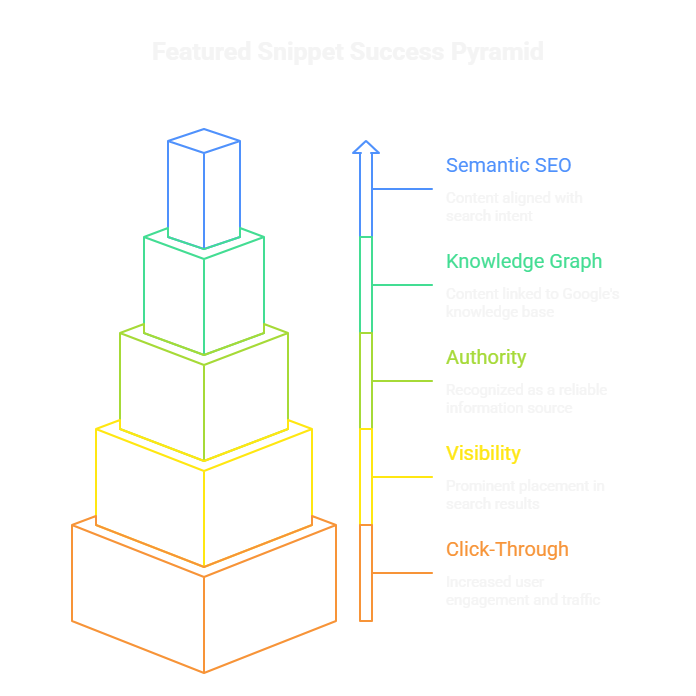
For businesses and creators, appearing in a featured snippet builds authority, visibility, and click-through potential, as Google’s algorithms often select well-structured, context-rich content that aligns with the Knowledge Graph and semantic SEO principles.
Difference Between Traditional Snippets and AI-Generated Overviews
Traditional snippets display static excerpts based on query relevance. In contrast, AI-generated overviews, such as Google’s Search Generative Experience (SGE) or Bing Copilot answers, dynamically synthesize content from multiple sources using natural language processing (NLP). These AI-driven summaries don’t just quote one source, they integrate insights, evaluate context, and generate unique responses. This shift means SEO visibility is no longer limited to ranking but also includes being cited within these generative summaries.
How AI Systems Cite or Source Snippet Content
AI systems extract data from structured content, well-labeled headings, and clearly defined schema markup. They identify trustworthy information through contextual relevance, factual accuracy, and alignment with entities in the Knowledge Graph. Being cited in an AI-generated answer now depends on how clearly a page communicates meaning, not just keywords.
The Importance of AI-Aware Snippet Tracking for Modern SEO
Modern SEO requires monitoring both snippet performance and AI citations. Brands must evaluate how often their content appears or contributes to AI-generated answers. Tracking these insights helps maintain visibility in an era where AI shapes user journeys and determines digital authority.
Why Analyzing Snippet Performance Matters in 2025
In 2025, analyzing featured snippet performance has become a crucial part of modern SEO strategy. With the rise of AI-driven searches and zero-click results, traditional ranking reports no longer tell the full story. Search engines like Google and Bing now generate AI Overviews that summarize answers directly, often reducing user clicks to websites. This shift has made it essential for brands to track not just their position on SERPs but also their visibility within AI-generated answers.
How AI-Driven Searches Affect Visibility and Traffic
AI systems pull concise, high-quality information from top-ranking pages to generate summarized responses. When your content is used within these summaries, it strengthens your brand’s visibility even if users don’t click through. However, if your snippets are not cited, you lose potential traffic and recognition. Monitoring SERP visibility helps understand how often your brand appears in both snippets and AI Overviews.
Tracking Snippet Inclusion Frequency and AI Citations
Analyzing how frequently your pages appear in featured snippets and AI answers provides insight into your content’s authority. Regular tracking reveals fluctuations in snippet ownership and helps identify opportunities where your competitors might be cited more often.
Why Snippet Optimization Is Key for Brand Authority
A well-structured snippet positions your content as a reliable information source. By optimizing for user intent and content relevance, you improve your chances of being featured and cited by AI systems, reinforcing brand trust.
KPIs to Monitor
Key metrics include impressions, citation rate, and answer overlap, which together indicate how effectively your content performs in both traditional and AI-driven search experiences.
Key Metrics for Evaluating Featured Snippet Performance
Measuring the success of featured snippets in 2025 requires tracking the right performance indicators that reflect both visibility and user interaction within AI-driven search environments. These metrics help you understand how effectively your content appears, performs, and sustains its position in the SERPs amid evolving AI integrations.
Snippet Appearance Frequency
This metric shows how often your web pages are displayed as featured snippets across search queries. A consistent appearance frequency indicates strong content relevance and optimization. Monitoring this helps identify which pages dominate AI-influenced SERPs and which need refinement to reclaim visibility.
AI Citation Rate
AI citation rate reveals how frequently your brand or content is referenced within AI-generated answers from tools like Google’s AI Overviews or Bing Copilot. A higher citation rate signals strong topical authority and structured content that AI systems trust and reuse.
Ranking Stability
Ranking stability measures how steady your snippet positions remain over time. Frequent fluctuations may indicate rising competition or evolving algorithms. Stable rankings reflect solid content authority and proper alignment with user intent.
CTR Changes Post-AI Answer Rollout
Tracking click-through rate variations before and after AI-generated answers appear provides insight into traffic loss or gain. It highlights whether your snippet continues to attract users despite AI summaries.
Engagement and Conversion Tracking
Beyond visibility, engagement rate and conversions reveal how effectively snippet visitors interact with your site. Monitoring dwell time, bounce rate, and conversion signals ensures that snippet-driven traffic translates into meaningful outcomes.
Top Tools for Analyzing Featured Snippet Performance 2025 Edition
Google Search Console (GSC)
Overview: Core platform for measuring snippet impressions and CTR.
Use-case: Use Search Appearance filters to identify snippet-triggered queries and Compare date ranges to detect post-AI changes.
Key metrics: CTR fluctuation, query segmentation, snippet presence, impression trends.
Pros: Free and accurate for organic performance tracking.
Limitations: Limited visibility into AI Overview impressions.
Integration tips: Export data to Looker Studio or BigQuery for long-term snippet trend analysis.
Google Analytics 4 (GA4)
Overview: Measures user engagement and session behavior from snippet-driven traffic.
Use-case: Compare engagement time between snippet clicks and AI answer referrals.
Key metrics: Event tracking, user sessions, engagement time, attribution modeling.
Pros: Deep user behavior insights.
Limitations: Doesn’t distinguish between AI and organic clicks natively.
Integration tips: Combine GA4 events with GSC data for hybrid snippet visibility reports.
Semrush Position Tracking & Sensor
Overview: Tracks SERP volatility and AI Overview changes.
Use-case: Monitor keywords losing snippets to AI answers via Sensor AI Feature Index.
Key metrics: SERP volatility, keyword ranking, snippet loss, AI feature index.
Pros: Real-time alerts and historical SERP feature data.
Limitations: Premium-only advanced AI tracking.
Integration tips: Sync data with GA4 for impact correlation.
Ahrefs Rank Tracker & Site Explorer
Overview: Measures snippet ownership and competing citations.
Use-case: Identify pages cited in AI-generated responses.
Key metrics: Backlink authority, keyword visibility, featured-snippet share.
Pros: Strong backlink and ranking insights.
Limitations: Limited AI citation tracking depth.
Integration tips: Combine with SerpApi outputs for richer AI snippet mapping.
AccuRanker / seoClarity / BrightEdge
Overview: Enterprise tools offering pixel-based snippet visibility.
Use-case: Measure share of voice (SOV) and AI Overview indicators.
Key metrics: SERP pixel depth, SOV, AI overview detection.
Pros: Accurate enterprise-level analytics.
Limitations: High cost for small teams.
Integration tips: Use APIs to feed dashboards in Power BI or Looker Studio.
SerpApi / DataForSEO / Zenserp (SERP APIs)
Overview: Collect programmatic snippet and AI answer data.
Use-case: Scrape real-time results for text similarity and citation tracking.
Key metrics: SERP data extraction, JSON parsing, AI snippet text analysis.
Pros: Precise and automated SERP monitoring.
Limitations: Requires technical setup.
Integration tips: Combine with NLP tools for content overlap scoring.
Frase / SurferSEO / MarketMuse
Overview: AI-powered platforms enhancing snippet relevance.
Use-case: Identify answer paragraphs likely to trigger snippets or AI citations.
Key metrics: Content scoring, semantic entities, query clustering, on-page optimization.
Pros: Actionable optimization recommendations.
Limitations: Focused on content improvement, not SERP tracking.
Integration tips: Pair with GSC data for post-optimization validation.
ChatGPT (GPT-5) / OpenAI API
Overview: Used to test AI-generated answer results for your queries.
Use-case: Check whether your site’s content is cited or paraphrased.
Key metrics: Prompt engineering, citation testing, AI auditing.
Pros: Fast qualitative AI answer analysis.
Limitations: Not automated for scale.
Integration tips: Use structured prompts and logging for repeat audits.
BigQuery / Looker Studio / Power BI
Overview: Visualization platforms for unified SEO reporting.
Use-case: Build dashboards combining GSC, rank data, and text-match scores.
Key metrics: SEO reporting automation, cross-platform integration, data pipelines.
Pros: Scalable and customizable.
Limitations: Requires setup expertise.
Integration tips: Automate imports from APIs and analytics tools.
NLP Libraries (spaCy, difflib, fuzzywuzzy)
Overview: Used to analyze text similarity between snippets and AI answers.
Use-case: Calculate overlap and detect citation reuse.
Key metrics: Cosine similarity, text embeddings, content overlap ratio.
Pros: High precision in textual comparison.
Limitations: Technical skill required for model setup.
Integration tips: Combine outputs with SerpApi data for end-to-end AI citation analysis.
AI-Specific Analytics Tools for Tracking AI Answer Citations
As AI-generated answers become central to modern search results, tracking how and where your content is cited within these responses is essential. Traditional SERP tools only reveal keyword rankings, but AI-specific analytics tools go a step further, they show how often your brand or content appears within AI Overviews, Bing Copilot, or Perplexity AI results. This helps marketers understand their real presence inside generative search ecosystems.
Emerging AI Citation Tracking Tools 2025
In 2025, several advanced tools are emerging to monitor citations and overlaps in Search Generative Experience (SGE) results. These platforms use NLP and structured data extraction to identify when AI models use your content for generating answers. They allow SEOs to see whether their site is being referenced, summarized, or omitted entirely from AI-generated results, offering deeper insight into content visibility.
Tools to Use for Structured Query and AI Analysis
- AlsoAsked – Maps user intent and question patterns that often lead to AI-generated summaries.
- Keyword Insights AI – Analyzes clustered queries to detect which keywords trigger AI Overviews or generative responses.
- ContentKing – Continuously monitors on-page changes and tracks structured data relevance for AI citation optimization.
Monitoring AI Overlap Visibility
Early adopters are combining these tools with traditional SERP trackers to monitor both snippet performance and AI overlap visibility. By integrating SGE analytics with keyword data, marketers can measure how generative systems like ChatGPT and Bing Copilot reference their content, helping them adapt faster to the evolving landscape of AI search.
How to Analyze Snippet Performance for AI-Generated Answers
Analyzing featured snippet performance in the era of AI-generated answers requires a structured approach. The goal is to understand how well your content performs in both SERPs and AI-driven results, while identifying where optimization can increase visibility and citation potential. Below is a practical framework for conducting a snippet performance audit.
Step-by-Step Snippet Performance Audit Process
- Collect Baseline Data: Start by using Google Search Console (GSC) to extract performance data for queries that trigger snippets. Record impressions, clicks, and average position.
- Group Keywords by Intent: Use keyword clustering to organize queries based on topic and search intent. This helps identify content that aligns with snippet triggers or potential AI answer inclusion.
- Evaluate Snippet Coverage: Check how often your pages appear as featured snippets across target clusters. Compare this with competitor data using Semrush or Ahrefs.
Measure Snippet and AI Answer Overlap Rate
Use SerpApi or similar APIs to monitor whether your snippets are cited or referenced in AI-generated answers. Calculate overlap by comparing URLs that appear in both featured snippets and AI results. A high overlap rate indicates strong topical authority and entity alignment.
Identify Opportunities for Improvement
Look for content with declining snippet presence or missing schema markup. Optimize headings, concise definitions, and structured data to enhance snippet eligibility. Strengthen entity SEO through clear, fact-based language that aligns with Knowledge Graph entities.
Real-World Workflow Example
Export keyword data from GSC, fetch AI answer visibility via SerpApi, and analyze textual similarity using NLP tools like Python or OpenAI embeddings. This workflow helps pinpoint content gaps and ensures consistent snippet visibility across both traditional and AI-enhanced search results.
Conclusion
In today’s AI-driven search landscape, snippet analytics go far beyond traditional rankings, they focus on understanding how content contributes to AI visibility and brand credibility. By combining SERP tracking with advanced semantic optimization, marketers can monitor how often their content appears in featured snippets or is cited within AI-generated answers. Integrating data-driven tools and citation monitoring ensures continuous insight into shifting search dynamics. As AI continues to shape user discovery patterns, aligning your content optimization strategy with these evolving algorithms becomes essential. Future-proofing your SEO involves building trust, structuring data for clarity, and maintaining relevance within AI search ecosystems. Mastery in snippet analytics ensures your content remains both visible and authoritative in the rapidly changing world of intelligent search.